Summary
Chinese edition available
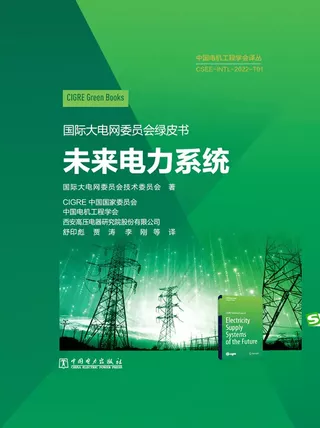
This book offers a vision of the future of electricity supply systems and CIGRE’s views on the know-how that will be needed to manage the transition toward them.
A variety of factors are driving a transition of electricity supply systems to new supply models, in particular the increasing use of renewable sources, environmental factors and developments in ICT technologies. These factors suggest that there are two possible models for power network development, and that those models are not necessarily exclusive:
1. An increasing importance of large networks for bulk transmission capable of interconnecting load regions and large centralized renewable generation resources, including offshore and of providing more interconnections between the various countries and energy markets.
2. An emergence of clusters of small, largely self-contained distribution networks, which include decentralized local generation, energy storage and active customer participation, intelligently managed so that they operate as active networks providing local active and reactive support.
The electricity supply systems of the future will likely include a combination of the above two models, since additional bulk connections and active distribution networks are needed in order to reach ambitious environmental, economic and security-reliability targets. This concise yet comprehensive reference resource on technological developments for future electrical systems has been written and reviewed by experts and the Chairs of the sixteen Study Committees that form the Technical Council of CIGRE.
- Provides a consistent view on the future of electricity supply systems
- Offers know-how needed to manage the transition towards the Future Energy Supply Systems
- Developed by the experts of CIGRE
Table of content
1. Introduction and Overview
2. Rotating Electrical Machines
3. Power Transformers and Reactors
4. Transmission and Distribution Equipment
5. Insulated Cables
6. Overhead Lines
7. Substations and Electrical Installations
8. DC Systems and Power Electronics
9. Protection and Automation
10. Power System Development and Economics
11. Power System Operation and Control
12. Power System Environmental Performance
13. Power System Technical Performance
14. Electricity Markets and Regulation
15. Active Distributed Systems and Distributed Energy Resources
16. Materials and Emerging Test Techniques
17. Information Systems and Telecommunications
Additional informations
| Publication type | Green Books |
|---|---|
| Reference | GB 8 CN |
| Publication year | |
| Publisher | CIGRE / China Electric Power Press |
| ISBN | 978-7-5198-7122-2 |
| Study committees |
|
Authors
Translation by China Electric Power Press
Editors: Nikos Hatziargyriou, Iony Patriota de Siqueira
Authors: Iony Patriota de Siqueira, Nikos Hatziargyriou, Nico Smit, Kay Chen, Ana Joswig, Alejandro Cannatella, Eduardo José Guerra, Byeong hui Kang, Traian Tunescu, Simon Ryder, Nenad Uzelac, Hiroki Ito, René Peter Paul Smeets, Venanzio Ferraro, Lorenzo Peretto, Rusty Bascom, Marc Jeroense, Marco Marelli, James A. Pilgrim, Roland D. Zhang, Herbert Lugschitz, Taku Yamakawa, Zibby Kieloch, Mark Osborne, Koji Kawakita, Carl Barker, Les Brand, Olivier Despouys, Robin Gupta, Neil Kirby, Kees Koreman, Abhay Kumar Jain, Carmen Longás Viejo, Larsson Mats, James Yu, Konstantin Staschus, Chongqing Kang, Antonio Iliceto, Ronald Marais, Keith Bell, Phil Southwell, Yury Tsimberg, Susana Almeida de Graaff, Vinay Sewdien, Henk Sanders, César Batista, Flavia Serran, Mercedes Miranda Vázquez, Hector Pearson, Genevieve Lietz, Zia Emin, Alex Cruickshank, Yannick Phulpin, Christine Schwaegerl, Geza Joos, Ralf Pietsch, Giovanna Dondossola, Marcelo Costa de Araujo, Karen McGeough
Keywords
Power Generation and Electromechanical Energy Conversion (A1), Power transformers and reactors (A2), Transmission & distribution equipment (A3), Insulated cables (B1), Overhead lines (B2), Substations and electrical installations (B3), DC systems and power electronics (B4), Protection and automation (B5), Power system development and economics (C1), Power system operation and control (C2), Power System Sustainability and Environmental Performance (C3), Power system technical performance (C4), Electricity markets and regulation (C5), Active distribution systems and distributed energy resources (C6), Materials and emerging test techniques (D1), Information Systems, Telecommunications and Cybersecurity (D2)